What to Wear and What to Bring in the Raufarhólshellir Lava Tunnel
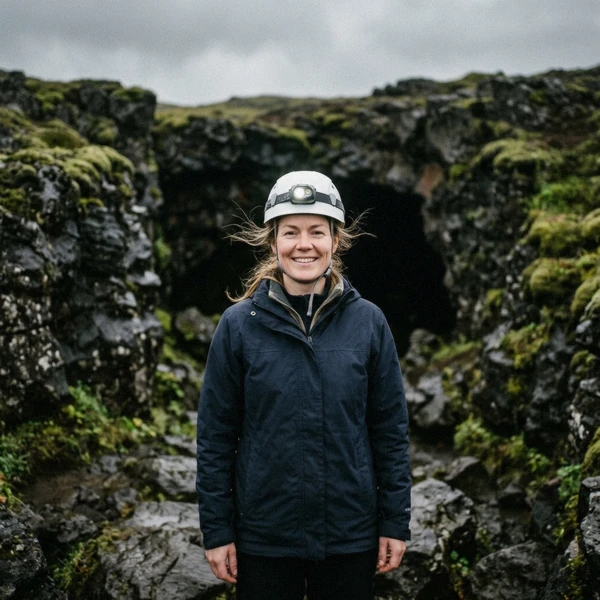
What to wear in the Raufarhólshellir lava tunnel comes down to one swap: pack for wet, not for cold. Every tour hands you a helmet, a headlamp and, through winter, a pair of crampons, so the list of what is actually on you is short. The cave sits at a steady 3 to 4°C in every month and the roof drips year-round, which is the local fact that decides your whole outfit. If you want the numbers first, every Raufarhólshellir lava tunnel tour compared lists current prices and departure times.
Quick answer
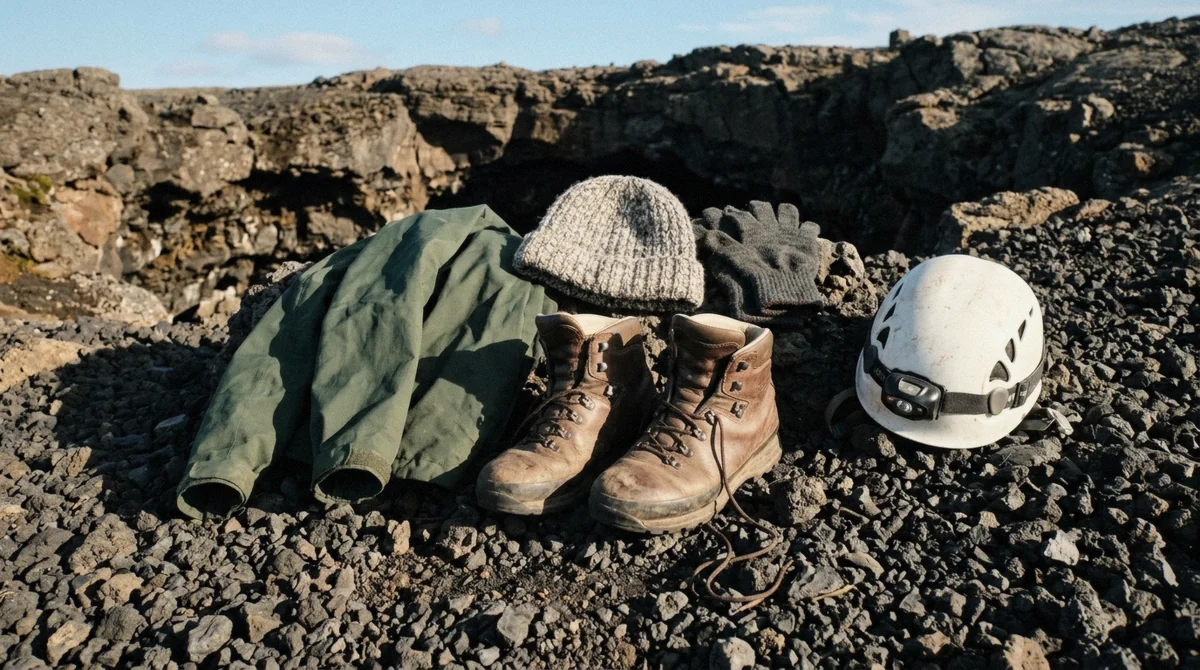
Tours provide the helmet, headlamp and, from October to April, crampons, so you are not buying caving gear for this. What is on you is a waterproof jacket, a warm mid layer and shoes with real grip, because the cave holds 3 to 4°C all year and the roof drips in every season regardless of the weather outside. Jeans are fine on the three standard tours and a poor idea on the Lava Falls Adventure, which also requires hiking boots with ankle support.
Key takeaways
- Provided by every tour: helmet, headlamp, and crampons handed out October through April
- On you: a waterproof jacket, a warm mid layer, and shoes with grip on wet rock
- Biggest mistake: dressing warm instead of waterproof, since the roof drips whatever month it is
- Local number: 3 to 4°C, steady, inside the cave in every season
- Footwear answer: hiking shoes with grip for the standard tours, ankle-support boots compulsory on the Lava Falls Adventure
- Seasonal delta: gloves and a hat matter October to April, when the entrance ices over
What to Wear
Base and mid layer
A thin base layer under a wool or fleece mid layer handles the cave's steady 3 to 4°C better than one thick coat. You will warm up on the entrance slope and cool straight back down once you are on the footbridge, so a layer you can open at the collar is more useful than one that stays sealed. Wool and fleece both keep some warmth wet; cotton does not, which is the whole reason cotton fails here.
Outer layer: waterproof beats warm
This is the one decision that matters. Meltwater and rain work down through the basalt above the walkway and drip from the roof in every season, landing on shoulders, hoods and camera straps whether it is July or January outside. A genuinely waterproof shell with a hood does more for your hour underground than an extra jumper ever will.
A ski jacket rated for snow but not rain will still wet through on a long drip line.
Footwear
Hiking shoes or boots with a real tread are the default recommendation and cover every standard tour. The walkway itself is lit steel mesh, but the ramps in and out are wet, uneven rock, and that is where flat-soled shoes lose their grip.
- Hiking shoes or boots with grip - the right call for the three standard tours, fine on the mesh footbridge and the entrance ramp alike
- Trainers or sneakers - workable on the footbridge itself, risky on the wet rock ramps either side of it
- Sandals, flip-flops or bare feet - not appropriate anywhere in the cave; the entrance slope is loose rubble as well as wet rock
- Ankle-support hiking boots - compulsory, not optional, on the Lava Falls Adventure, where you leave the walkway and climb over collapsed roof material for up to four hours
Colour guide
| Colour | Good? | Why |
|---|---|---|
| Black | Good | Hides rock dust and the iron-red stain that rubs off the walls onto sleeves and knees |
| Earth tones (khaki, brown) | Good | Shows mud from the entrance ramp less than lighter fabric, and most tour groups already wear these |
| Bright or neon layers | Good | Easier for your guide to pick out in a group photo taken in near darkness, and easier to spot if the group spreads out at the skylights |
| White | Bad | Shows the cave's red and green mineral dust and any rock stain immediately |
| Camouflage pattern | Neutral | No legal restriction on wearing it in Iceland, but it photographs muddy under the warm walkway lighting and gains you nothing over a plain dark colour |
| Cotton, any colour | Bad | Soaks up the roof drip and stays cold and wet for the rest of your day, whatever shade it is |
| Quick-dry synthetic or wool | Good | Sheds the drip instead of holding it, and dries out on the drive back to Reykjavík |
What to Bring
The full list
Nine items cover the standard tours. Add the tenth only if you booked the Lava Falls Adventure.
- Waterproof jacket with a hood - the roof drips in every season, no exceptions
- Warm mid layer, wool or fleece - the cave holds a steady 3 to 4°C
- Hiking shoes or boots with real grip - the entrance ramp is wet rock
- Gloves and a warm hat - the entrance ices over October through April
- A camera built for low light - phones manage the skylights and struggle deeper in
- A dry bag or a sealed phone case - drips fall straight onto shoulders and gear
- A small backpack - somewhere to stash the layer you peel off in the car park
- A spare pair of socks - the entrance ramp splashes over low-cut shoes
- Cash or a card for coffee at reception - small comfort before or after
- Ankle-support hiking boots - compulsory only on the Lava Falls Adventure, checked before departure
What Raufarhólshellir Tours Provide (So You Do Not Overpack)
The gear you are not buying
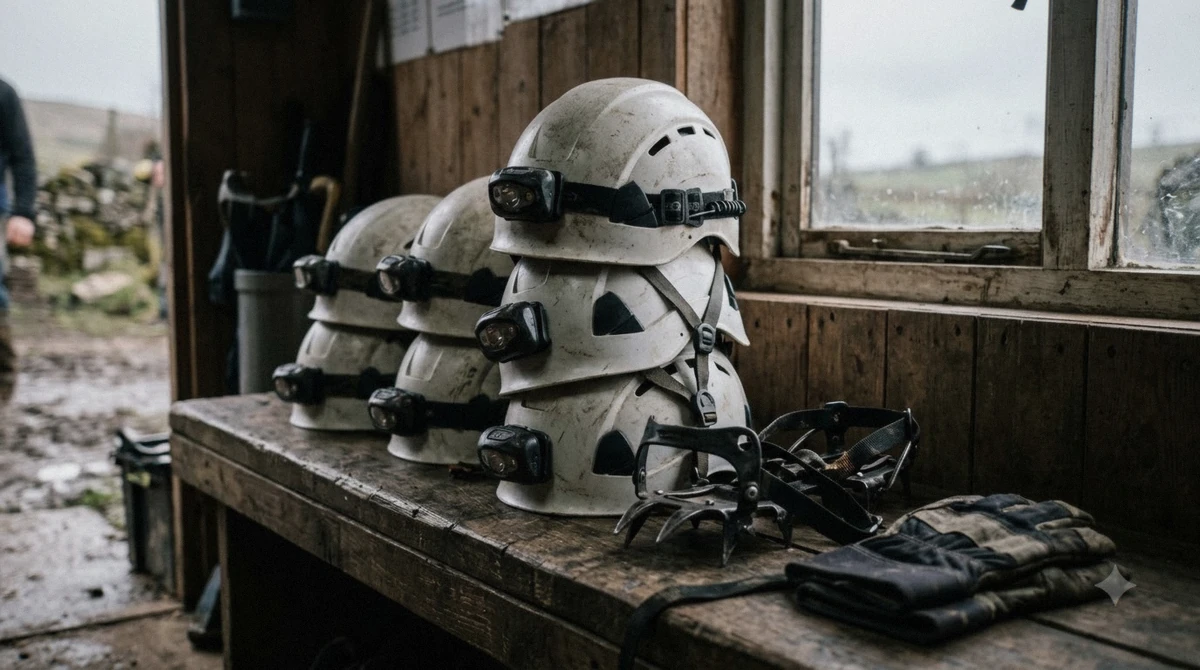
Every tour into the cave supplies the equipment that actually matters once you are underground, so there is no reason to buy or borrow specialist caving gear before you fly to Iceland. The table below is what is handed to you at reception against what stays on your own packing list.
| Item | Usually provided | Bring your own | Notes |
|---|---|---|---|
| Helmet | Yes | No | Fitted at reception on all four tours |
| Headlamp | Yes | No | Handed out with the helmet; the Underground Expedition fits both in under five minutes |
| Crampons | Yes, October to April | No | Not issued outside that window, since the entrance is not icy the rest of the year |
| Guide | Yes | No | Access is guide-only; the gate stays locked between departures |
| Transport from Reykjavík | Only on the bus tour | Your own car on the other three | The ICELANDIA coach leaves the BSÍ terminal; the others meet at the cave |
| Waterproof jacket | No | Yes | No rental at reception; this is the one item people regret leaving in the car |
| Hiking shoes | No | Yes | Needed for grip on the entrance ramp on every tour |
| Ankle-support boots | No | Compulsory on the Lava Falls Adventure | Checked before the Lava Falls Adventure departs; a soft-soled trainer will not pass |
| Gloves and hat | No | Yes, October to April | The entrance is the coldest stretch of the whole tour in winter |
| Bathroom access | Yes, at reception | No | Before and after; there is none inside the cave itself |
| Coffee | Yes, at reception | No | A small comfort on the way back from a wet hour underground |
What Not to Wear or Bring
Five things that cause real problems underground, sourced from what actually goes wrong on this specific tour rather than a generic packing list copied from a beach guide.
- Cotton clothing - soaks up the roof drip and stays cold and wet for the rest of your day
- Sandals, flip-flops or bare feet - no grip on the wet rock ramp and the loose rubble slope near the entrance
- Anything you cannot get wet - the roof drips in every season and there is no dry route around it
- An unprotected daypack - the same drip problem, just landing on your gear instead of you
- Food, drink, smoking or vaping gear you plan to use inside - none of it is allowed once you are past reception
Packing by Season
The cave does not change, the entrance does
Air temperature underground holds at 3 to 4°C whatever the calendar says. What changes is the walk between the car park and the cave mouth, and what the entrance itself is doing that month.
| Season | Wear this |
|---|---|
| December to February | Waterproof jacket, warm mid layer, gloves, a hat, and boots with a tread that grips ice, not just wet rock |
| March to May | Waterproof jacket and mid layer still, gloves optional most days, hiking shoes rather than winter boots |
| June to August | A lighter waterproof shell over a t-shirt or thin layer, hiking shoes, no gloves needed |
| September to November | Waterproof jacket, a mid layer for the drive, light gloves useful by late November |
Full month-by-month conditions, including ice at the entrance and daylight either side of the drive, are on the best time of year to visit the lava tunnel.
Packing for Kids
Children carry the same waterproof-over-warm rule, sized down: a waterproof jacket with a hood, a mid layer underneath, and shoes with grip rather than school trainers with a worn tread. The minimum age is 3 at the cave and 6 on the bus pickup option, and the entrance slope, not the temperature, is the part that trips up small feet. The full breakdown of ages, the lights-out moment and which tour suits which child is on visiting the lava tunnel with kids.
What to Wear, by Which Tour You Booked
If you booked the standard hour at the cave
waterproof shell, one warm layer, shoes with grip. Jeans are fine and the helmet and headlamp are handed to you at reception
If you booked the 3 to 4 hour caving tour
hiking boots with ankle support are a condition of joining, plus gloves you can scramble in. Guides check at the desk and turn people away
If you are coming between October and April
add gloves and a hat, and expect crampons over your boots at reception. The entrance ices over in those months
If you are visiting with young children
waterproof over-trousers earn their place; kids touch the wet rock and sit on the steps in a way adults do not
If you are travelling hand luggage only
buy or rent boots in Reykjavík before you drive out; nothing at the cave rents footwear
What to Wear: Questions People Ask
Can I wear jeans in the lava tunnel?
On the three standard tours, yes, jeans are fine for the 55 to 60 minutes on the footbridge. On the Lava Falls Adventure they are a poor choice: three to four hours off the walkway, scrambling over rubble, means denim that gets wet stays wet and heavy for the rest of the trip.
Can I wear shorts in the lava tunnel?
Shorts are not the problem here that they are on a hot-weather tour; the cave sits at 3 to 4°C, so most visitors are cold in shorts within a few minutes, not overheated. A pair of trousers or leggings under a waterproof layer is the more comfortable call in every season.
What should I not bring?
Cotton clothing, flip-flops or sandals, and anything you cannot get wet. The roof drips year-round and the entrance ramp is loose rock, so items that fail in damp, uneven conditions cause the most trouble.
Does the tour provide any gear?
Yes: a helmet and a headlamp on every tour, and crampons from October to April. What you supply is clothing and footwear, none of which is rented at reception.
Will my phone or camera get wet?
It can, since the drip lands unpredictably along the walkway. A sealed phone case or a small dry bag solves it; a camera built for low light is worth more than a waterproof one, since the deeper sections beyond the skylights are genuinely dark.
Is the lava tunnel cold?
Not dramatically. 3 to 4°C is closer to a refrigerator than a freezer, and most people are comfortable for the hour in a mid layer and a waterproof shell. What catches people out is not the temperature but the wet: a soaked jacket at 3°C feels far colder than a dry one.
Is what I wear different for the Lava Falls Adventure tour?
Yes. Past the walkway there is no lit footbridge, and the route crosses loose collapsed roof material for up to four hours. Ankle-support hiking boots are compulsory and checked before departure, and a waterproof layer matters even more, since there is more time and more contact with wet rock than on the standard hour.